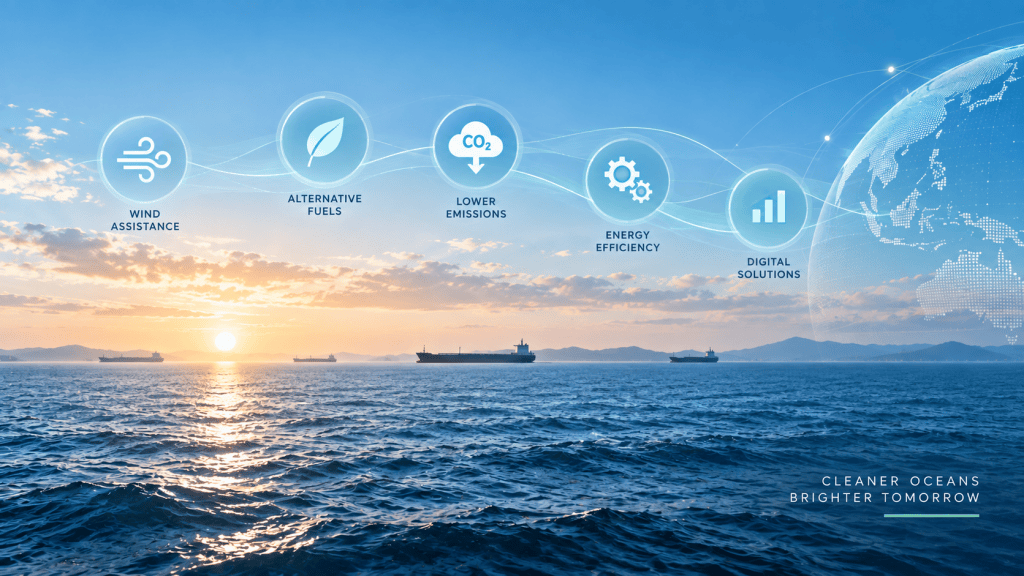
The maritime industry is entering a period of significant transformation as shipowners, shipyards and technology providers work to reduce greenhouse gas emissions and improve vessel efficiency.
While alternative fuels will play an important role in the long-term transition, energy-efficiency technologies that can reduce fuel consumption and emissions today are becoming increasingly important.
1. Wind-Assisted Propulsion Systems
Wind-Assisted Propulsion Systems (WAPS) are attracting growing attention as a practical solution for reducing fuel consumption and emissions. Technologies such as suction sails, rotor sails and rigid sails use wind energy to provide additional propulsion and reduce the load on the vessel’s main engine.
One of the key advantages of WAPS is that it can complement existing propulsion systems without requiring a complete change of fuel or engine technology. Depending on the vessel type, route, wind conditions and system configuration, WAPS can contribute to meaningful energy savings while supporting shipowners in their efforts to reduce greenhouse gas emissions.
2. Air Lubrication Systems
Air Lubrication Systems (ALS) are another promising energy-efficiency technology for modern vessels. These systems create a layer of air bubbles beneath the hull, reducing frictional resistance between the vessel and the surrounding water and thereby helping to lower propulsion power demand and fuel consumption.
ALS can be applied to both newbuildings and existing vessels, although the achievable benefits depend on factors such as hull form, vessel speed and operating profile. As the technology can work alongside conventional propulsion systems and alternative fuels, it offers shipowners an additional pathway to improve vessel efficiency and reduce emissions.
3. Alternative Fuels
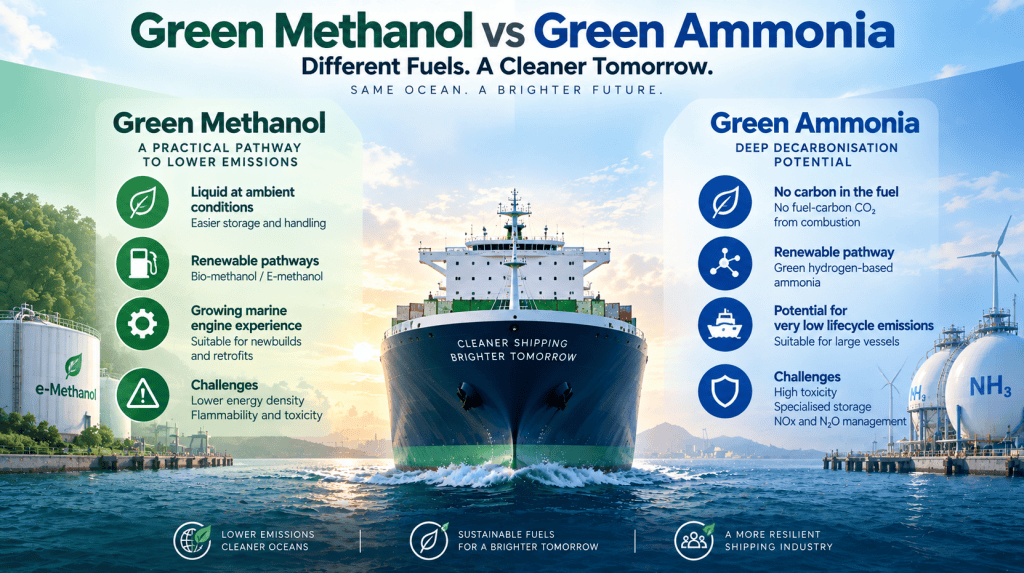
Alternative fuels will play a central role in the maritime industry’s transition towards lower and ultimately zero greenhouse gas emissions. LNG, methanol, ammonia, hydrogen and sustainable biofuels are among the options being considered, although each has different characteristics in terms of availability, infrastructure, safety, cost and emissions performance.
There is currently no single alternative fuel that can meet the requirements of every vessel type and trade. Shipowners therefore need to consider not only the environmental benefits of each fuel, but also fuel availability, storage requirements, vessel design, safety considerations and the development of global bunkering infrastructure.
4. Energy-Efficient Ship Design and Equipment
Improving the overall energy efficiency of a vessel is another important part of maritime decarbonisation. Optimised hull forms, energy-saving devices, efficient propulsion systems, waste heat recovery and advanced onboard equipment can all contribute to reducing the amount of energy required to operate a vessel.
The greatest efficiency gains are often achieved by combining several technologies rather than relying on a single solution. For example, improved hull design and efficient propulsion can be integrated with WAPS, ALS and alternative fuels to reduce overall energy demand and emissions throughout the vessel’s operating life.
5. Digitalisation and Smart Energy Management
Digital technologies are becoming increasingly important in improving vessel efficiency. Advanced monitoring systems, data analytics and AI-based optimisation tools can help operators better understand vessel performance and identify opportunities to reduce fuel consumption and emissions.
Real-time data can also support more efficient route planning, speed optimisation and machinery operation. When combined with energy-saving technologies, digital solutions can help shipowners improve operational efficiency while supporting their longer-term decarbonisation strategies.
Conclusion
The transition towards greener shipping will not be driven by a single technology. Instead, the future of maritime decarbonisation is likely to involve a combination of cleaner fuels, energy-efficiency technologies, digital solutions and improved vessel design.
As regulations become more stringent and the industry moves towards its long-term climate goals, the ability to select and integrate the right technologies for each vessel and operating profile will become increasingly important. Continued innovation and collaboration among shipowners, shipyards, equipment suppliers and technology providers will therefore be essential to building a more efficient and sustainable maritime industry.


답글 남기기