Introduction
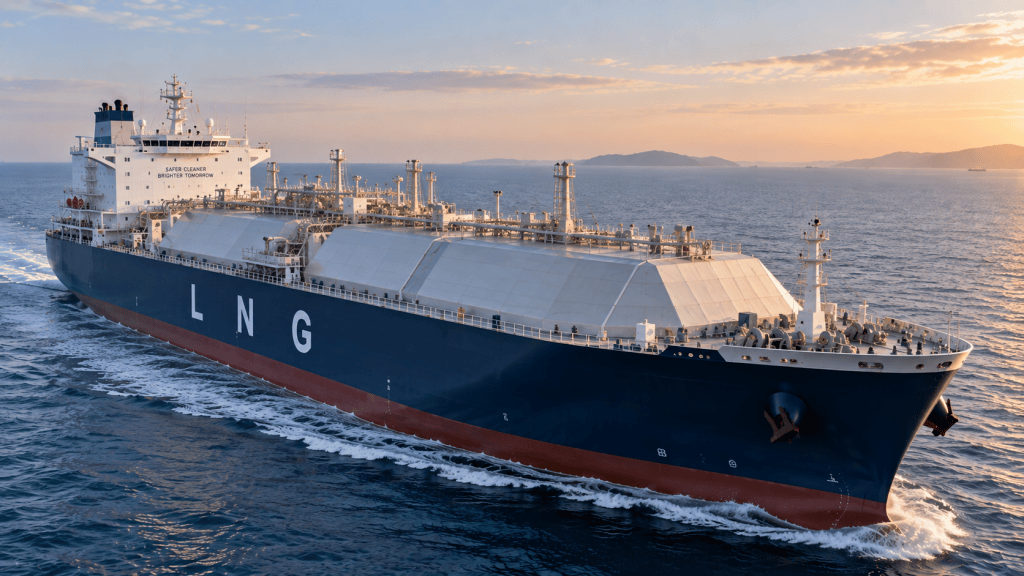
LNG has played an important role in the shipping industry’s search for cleaner alternatives to conventional marine fuels. Over the past decade, the number of LNG-fuelled vessels has increased significantly, supported by established engine technologies and expanding bunkering infrastructure.
Compared with conventional oil-based marine fuels, LNG can reduce sulphur oxides, particulate matter and, depending on engine and operating conditions, certain other air pollutants. It can also reduce direct CO₂ emissions because natural gas has a lower carbon content per unit of energy than conventional marine fuels.
However, LNG remains a fossil fuel, and methane emissions across the fuel lifecycle have become a major concern. This raises an important question for the maritime industry: is LNG primarily a transition fuel, or can it remain part of shipping’s long-term decarbonisation strategy?
1. What Is LNG?
Liquefied Natural Gas, or LNG, is natural gas that has been cooled to approximately -162°C so that it becomes liquid.
Liquefaction significantly reduces its volume, making it practical to transport and store large quantities of natural gas onboard ships.
For marine propulsion, LNG is stored in specially designed cryogenic fuel tanks and supplied to engines through dedicated fuel gas supply systems.
LNG can be used in different engine configurations, including dual-fuel engines capable of operating on both gas and conventional liquid fuels.
2. Why Has LNG Become Popular in Shipping?
One of LNG’s main advantages is technological maturity.
Unlike several emerging alternative fuels, LNG propulsion systems already have substantial operational experience across vessel types including container ships, tankers, cruise ships, ferries and other merchant vessels.
A global LNG supply chain also already exists, although marine bunkering availability varies by region and port.
For shipowners considering alternatives to conventional fuels, this combination of established technology, infrastructure and operational experience can reduce some of the uncertainties associated with adopting a new fuel.
3. Air Pollution Benefits
LNG can provide significant benefits in terms of local air pollutants.
Because LNG contains virtually no sulphur, its use can substantially reduce sulphur oxide emissions compared with conventional high-sulphur marine fuels.
Particulate matter emissions can also be significantly reduced.
Depending on the engine technology, LNG can also contribute to reductions in nitrogen oxide emissions, although actual performance varies according to engine type and operating conditions.
These advantages have helped LNG become an attractive option for vessels operating in areas with strict air-quality requirements.
4. What About CO₂ Emissions?
Natural gas contains carbon, so LNG combustion still produces CO₂.
However, because natural gas has a higher hydrogen-to-carbon ratio than conventional oil-based fuels, direct CO₂ emissions from combustion can be lower on an energy-equivalent basis.
This can provide a Tank-to-Wake advantage.
However, evaluating LNG only on the basis of onboard CO₂ emissions does not provide the full environmental picture.
The entire fuel lifecycle must also consider emissions associated with natural gas extraction, processing, liquefaction, transportation and bunkering.
This is where methane becomes particularly important.
5. The Methane Slip Challenge
Methane is the principal component of natural gas and is a powerful greenhouse gas.
Methane can escape during natural gas production and transportation, but it can also be released from certain marine engines without being fully combusted. The latter is commonly referred to as methane slip.
The amount of methane slip varies significantly depending on engine technology and operating conditions.
This means that two LNG-fuelled ships may have quite different lifecycle greenhouse gas performance even if they consume similar amounts of fuel.
Reducing methane emissions throughout the supply chain and improving engine technology are therefore critical if LNG is to provide meaningful lifecycle GHG benefits.
6. Well-to-Wake Emissions
The increasing focus on lifecycle emissions is changing how alternative marine fuels are evaluated.
A Well-to-Wake assessment considers emissions from the production and supply of the fuel through to its final use onboard the vessel.
For LNG, this includes upstream methane leakage, liquefaction energy, transportation, bunkering and onboard combustion.
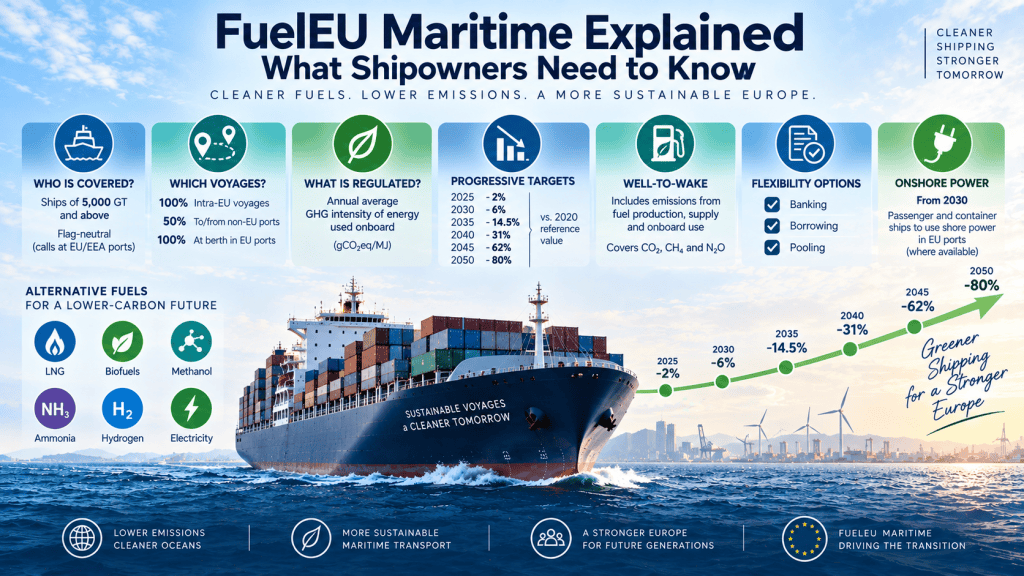
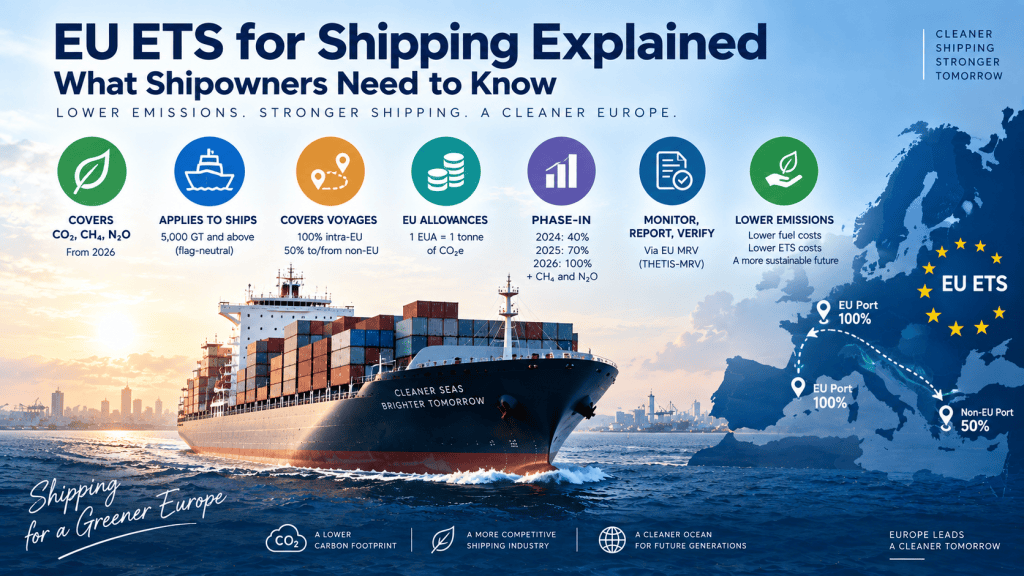
As maritime regulations increasingly incorporate lifecycle GHG intensity, shipowners will need to consider not only how much CO₂ is emitted from a ship’s exhaust but also how the fuel was produced and delivered.
This could significantly influence the long-term competitiveness of fossil LNG.
7. Bio-LNG and Synthetic LNG
One reason LNG infrastructure may continue to have value is the potential use of lower-GHG methane-based fuels.
Bio-LNG can be produced from biogas generated from organic waste and other sustainable biomass sources.
Synthetic LNG, sometimes called e-LNG, can potentially be produced using renewable hydrogen and captured carbon.
Depending on their production pathways, these fuels may offer lower lifecycle greenhouse gas emissions than conventional fossil LNG.
An LNG-capable vessel may therefore have the potential to transition from fossil LNG towards lower-GHG methane-based fuels without completely replacing its onboard fuel system.
However, availability, sustainability, production scale and cost remain important considerations.
8. LNG Infrastructure and Availability
LNG has a major practical advantage compared with many emerging alternative marine fuels: infrastructure already exists.
LNG terminals, storage facilities, transportation networks and bunkering operations have expanded considerably in major shipping regions.
This existing infrastructure can make LNG easier to adopt than fuels that require entirely new supply chains.
However, infrastructure investment also creates a potential risk of technological lock-in if vessels and ports remain dependent on fossil LNG for longer than is compatible with future decarbonisation targets.
The ability to use bio-LNG or synthetic LNG could therefore become increasingly important.
9. Is LNG Suitable for Newbuild Ships?
The answer depends on the vessel, trading pattern, regulatory exposure and the shipowner’s long-term fuel strategy.
For some newbuild projects, LNG may still provide practical advantages because of established technology and fuel availability.
However, shipowners need to consider the vessel’s expected operating life. A ship delivered today may remain in service for 20 to 25 years or longer, during which environmental regulations and fuel economics could change substantially.
Future fuel flexibility therefore becomes increasingly important.
Shipowners may need to consider whether an LNG-fuelled vessel can progressively use lower-GHG fuels or whether additional technologies will eventually be required.
10. LNG Compared with Methanol, Ammonia and Hydrogen
There is no single marine fuel that is ideal for every vessel.
LNG currently has an advantage in technological maturity and infrastructure.
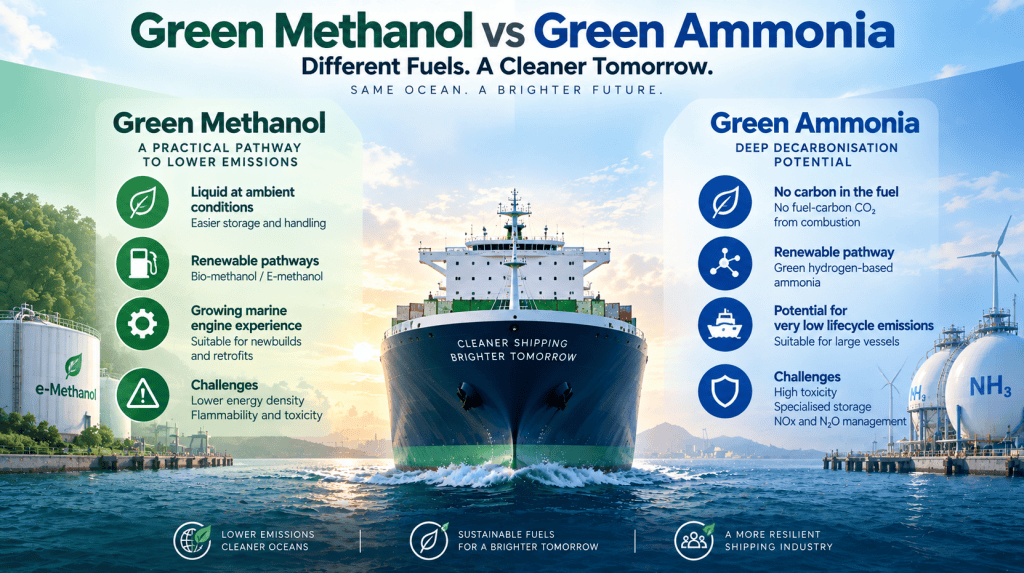
Methanol offers easier liquid-fuel handling characteristics but still requires careful consideration of its production pathway.
Ammonia contains no carbon but introduces significant toxicity, combustion and safety challenges.
Hydrogen can eliminate direct CO₂ emissions from the hydrogen itself but faces major storage and infrastructure limitations, particularly for deep-sea shipping.
The maritime energy transition is therefore unlikely to depend on one universal fuel.
Different fuels may serve different vessel types, routes and stages of the transition.
11. Transition Fuel or Long-Term Solution?
Conventional fossil LNG is generally difficult to view as a complete long-term solution for achieving deep maritime decarbonisation because it remains carbon-based and methane emissions can significantly affect its lifecycle GHG performance.
However, this does not necessarily mean that LNG technology and infrastructure will become irrelevant.
If LNG-fuelled vessels can increasingly use sustainable bio-LNG or synthetic renewable methane, existing gas-fuel technology could potentially support a pathway towards lower lifecycle emissions.
The key issue is therefore not simply whether a vessel uses LNG, but what type of methane it consumes and what the resulting Well-to-Wake GHG intensity is.
Conclusion
LNG has already established itself as one of the most widely adopted alternative marine fuels and offers practical advantages through mature engine technology, existing infrastructure and reductions in several local air pollutants.
However, its long-term climate performance is more complex.
Fossil LNG still produces CO₂, while methane leakage and methane slip can significantly affect lifecycle greenhouse gas emissions.
For this reason, LNG may be best understood as part of a broader transition rather than a guaranteed long-term zero-GHG solution.
Its future role could increasingly depend on reducing methane emissions and transitioning from fossil LNG towards lower-GHG alternatives such as sustainable bio-LNG and synthetic LNG.
Ultimately, shipowners evaluating LNG need to look beyond today’s fuel availability and consider the entire lifecycle emissions profile and the vessel’s ability to adapt during its operating life.


답글 남기기