Introduction
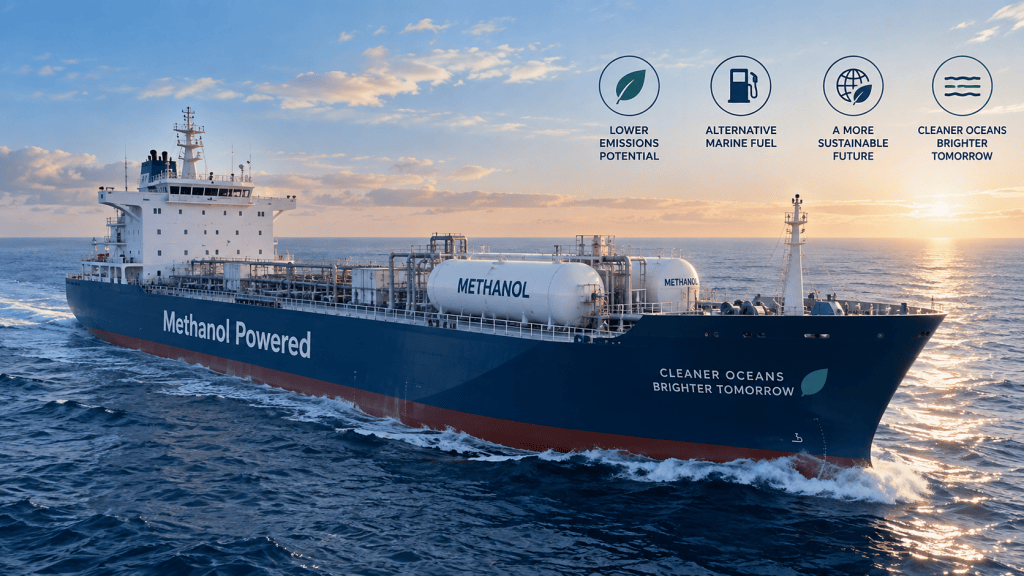
As the shipping industry looks for practical pathways to reduce greenhouse gas emissions, methanol has emerged as one of the alternative marine fuels receiving significant attention. Its ability to remain liquid under normal ambient conditions makes it relatively straightforward to store, handle and transport compared with fuels that require cryogenic or highly pressurised storage.
However, using methanol does not automatically make a vessel low-carbon. The environmental performance of methanol depends strongly on how the fuel is produced. Understanding the differences between conventional methanol, bio-methanol and e-methanol is therefore essential when evaluating its potential role in maritime decarbonisation.
1. What Is Methanol?
Methanol is a liquid chemical that can be used as a fuel in suitably designed marine engines. Unlike LNG, which requires cryogenic storage, methanol can be stored as a liquid at ambient temperature, although dedicated fuel tanks, piping, safety systems and appropriate materials are still required.
Methanol has a lower energy density than conventional marine fuels, meaning that a larger volume of fuel may be required to provide the same amount of energy. This can affect onboard fuel storage capacity and vessel arrangement, particularly for ships operating on long voyages.
2. Different Types of Methanol
The lifecycle greenhouse gas performance of methanol depends largely on its production pathway.
Conventional methanol is typically produced from fossil feedstocks such as natural gas or coal. Although it can offer certain operational and emissions advantages compared with conventional marine fuels, fossil-based methanol does not provide the same decarbonisation potential as renewable alternatives.
Bio-methanol can be produced from sustainable biomass, waste and other renewable feedstocks. Its lifecycle greenhouse gas emissions can potentially be significantly lower, depending on the feedstock and production process.
E-methanol, sometimes referred to as renewable synthetic methanol, can be produced using renewable hydrogen and captured carbon dioxide. When renewable energy and appropriate carbon sources are used, e-methanol has the potential to achieve substantially lower lifecycle greenhouse gas emissions.
3. Key Advantages of Methanol as a Marine Fuel
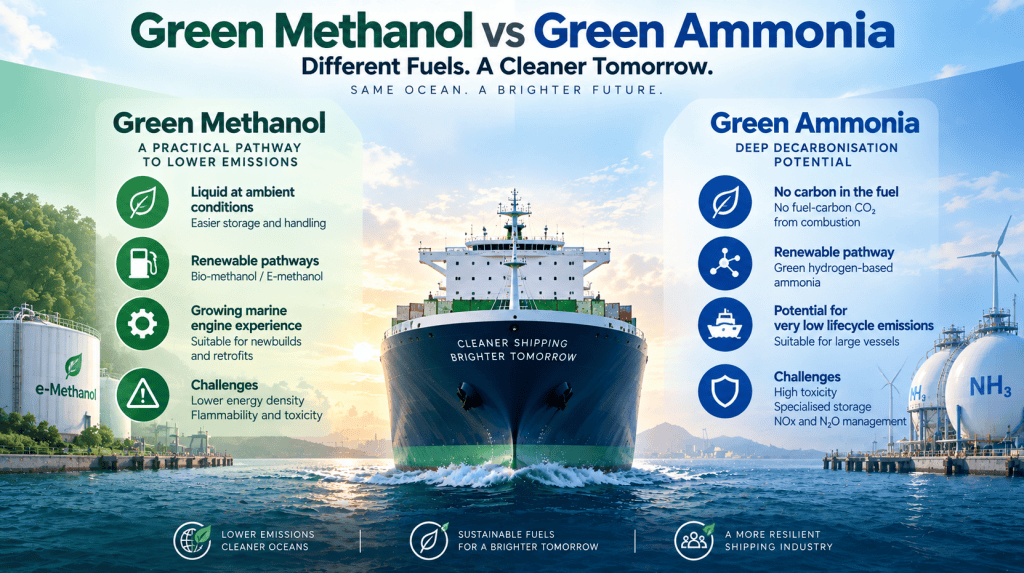
One of methanol’s main advantages is its relatively straightforward storage and handling characteristics. Because it is liquid at ambient temperature, it does not require the cryogenic storage arrangements associated with LNG or liquid hydrogen.
Methanol can also be used in internal combustion engines specifically designed or converted for methanol operation. This provides shipowners with a potential pathway for both newbuild vessels and, where technically and economically suitable, retrofit projects.
Another advantage is the possibility of gradually transitioning from fossil-based methanol towards bio-methanol or e-methanol as renewable production capacity develops. This may provide greater flexibility for shipowners during the energy transition.
4. Technical and Safety Considerations
Despite its advantages, methanol presents several technical and safety considerations. Methanol is toxic and flammable, requiring appropriate arrangements for storage, fuel supply, ventilation, leak detection and fire safety.
Its lower volumetric energy density compared with conventional marine fuels also means that additional tank volume may be required for an equivalent sailing range. The impact on cargo capacity and vessel arrangement therefore needs to be evaluated carefully.
Material compatibility is another consideration when designing methanol fuel systems. Tanks, piping, valves, pumps and other equipment need to be selected and arranged appropriately for safe and reliable operation.
5. The Importance of Lifecycle Emissions
The environmental value of methanol should not be assessed only by considering emissions produced onboard the vessel. The emissions associated with producing and supplying the fuel are also important.
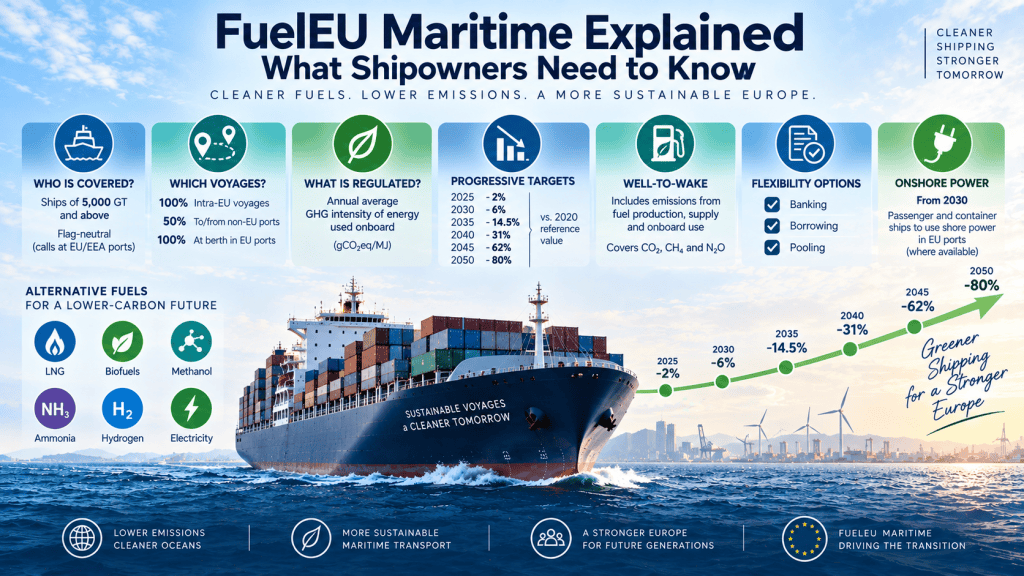
A Well-to-Wake assessment considers greenhouse gas emissions across the entire fuel lifecycle, from feedstock production and fuel manufacturing through transportation and final use onboard the vessel.
This means that two vessels using methanol could have very different overall greenhouse gas performance depending on how their fuel was produced. The transition towards bio-methanol and e-methanol will therefore be particularly important if methanol is to make a significant contribution to long-term maritime decarbonisation.
6. Methanol Infrastructure and Availability
The future adoption of methanol will also depend on the availability of sufficient fuel production and bunkering infrastructure. Methanol is already produced and transported globally for industrial purposes, providing an existing supply-chain foundation that may support its development as a marine fuel.
However, the challenge is not simply increasing the availability of methanol. The maritime industry will increasingly require methanol with significantly lower lifecycle greenhouse gas emissions.
Expanding the production of sustainable bio-methanol and e-methanol at competitive prices will therefore be an important factor in determining how widely methanol can be adopted across international shipping.
7. Methanol for Newbuilds and Retrofits
For newbuild vessels, methanol capability can be incorporated into the vessel design from an early stage. This allows fuel tanks, fuel supply systems, safety arrangements and machinery to be integrated with the overall ship design.
Retrofit projects can be more complex because existing vessels were not originally designed for methanol operation. Available space, tank arrangement, engine conversion, fuel supply systems, safety requirements and the vessel’s remaining operating life all need to be considered.
For this reason, the commercial viability of a methanol retrofit will vary significantly between individual vessels.
8. Methanol and the Future Fuel Mix
Methanol is unlikely to be the only fuel used in the future maritime energy system. Ammonia, hydrogen, biofuels, LNG-based pathways and other energy sources are also being developed and evaluated.
The relative competitiveness of these fuels will depend on factors including production cost, availability, infrastructure, safety, energy density and lifecycle greenhouse gas emissions.
Methanol’s relatively straightforward storage characteristics and its potential pathway towards renewable production make it an important option, but its long-term role will ultimately depend on whether sufficient quantities of low-GHG methanol can be produced at commercially viable prices.
Conclusion
Methanol offers several characteristics that make it attractive as an alternative marine fuel, including liquid storage at ambient temperature, established industrial handling experience and the possibility of using renewable production pathways.
At the same time, methanol presents challenges related to toxicity, lower energy density, onboard storage requirements, fuel availability and the cost of renewable production.
The key question is therefore not simply whether ships can operate on methanol, but how the methanol itself is produced. As lifecycle greenhouse gas performance becomes increasingly important, the development of sustainable bio-methanol and e-methanol will play a major role in determining whether methanol can become a significant long-term fuel for lower-emission shipping.


답글 남기기