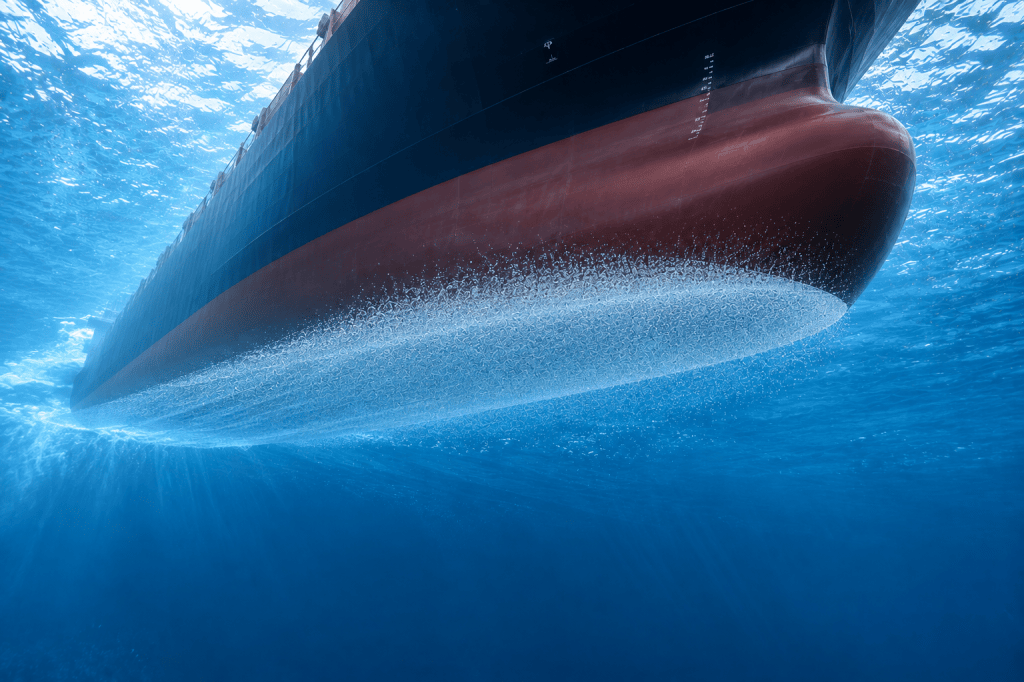
Air Lubrication Systems (ALS) are attracting increasing attention as a technology that can help improve ship energy efficiency. By introducing a controlled layer of air beneath a vessel’s hull, these systems aim to reduce the frictional resistance between the hull surface and the surrounding water, thereby reducing the propulsion power required to maintain a given speed.
Unlike conventional energy-saving devices that modify the flow of water around the hull or propeller, ALS works by changing the interaction between the hull and the water itself. This makes air lubrication an interesting option for shipowners looking for additional ways to reduce fuel consumption and emissions alongside other efficiency measures.
1. How Air Lubrication Systems Work
In a typical air lubrication system, air is supplied beneath the vessel through openings or air release units installed in the hull. The injected air forms a layer or distribution of bubbles along part of the underwater hull surface, reducing direct contact between the hull and the surrounding water. This can reduce frictional resistance and therefore lower the propulsion power required under suitable operating conditions.
The effectiveness of the system depends on how efficiently the air is generated and distributed beneath the hull. Vessel speed, hull form, draught, sea conditions and the arrangement of the air release system can all influence performance. The energy required to supply the air must also be considered when evaluating the overall net energy saving.
2. Main Types of Air Lubrication Systems
Air Bubble Lubrication
Air bubble lubrication introduces a continuous flow of small air bubbles beneath the vessel’s hull. These bubbles spread along the underwater surface and reduce the frictional interaction between the hull and the surrounding water. The performance of the system depends on maintaining an effective distribution of air over the relevant hull area.
Air Layer Lubrication
Air layer lubrication aims to create a more continuous layer of air between the hull and the surrounding water. By maintaining this air layer over part of the vessel’s bottom surface, the system can reduce the wetted area in direct contact with water and thereby reduce frictional resistance.
Air Cavity Systems
Air cavity systems use specially designed recesses or cavities in the vessel’s bottom to retain air beneath the hull. The trapped air reduces the area of the hull that is in direct contact with water, helping to reduce frictional resistance. This approach generally requires the hull form and cavity arrangement to be carefully designed to maintain the air cavity during operation.
3. Key Benefits of Air Lubrication Systems
The primary benefit of air lubrication is its potential to reduce the frictional resistance acting on a vessel’s hull. When the system operates effectively, this reduction in resistance can lower the propulsion power required to maintain a given speed, which can in turn reduce fuel consumption and associated greenhouse gas emissions.
Another potential advantage is that ALS can operate alongside other energy-saving technologies and propulsion solutions. Rather than replacing the main propulsion system, air lubrication can form part of a broader efficiency strategy that may include hull optimisation, energy-saving devices, wind-assisted propulsion and cleaner marine fuels.
4. Key Considerations for ALS Application
The suitability of an air lubrication system needs to be assessed for each vessel individually. Hull form, vessel size, operating speed, draught, trading pattern and expected sea conditions can all influence system performance. The location and arrangement of the air release units must also be carefully considered to achieve effective air distribution beneath the hull.
The energy consumed by compressors or blowers used to supply air is another important consideration. The overall benefit should therefore be evaluated on a net basis, taking into account the propulsion power saved as well as the power required to operate the ALS. Installation cost, maintenance requirements and integration with the vessel’s existing systems should also form part of the overall assessment.
5. Evaluating the Real-World Performance of ALS
The performance of an air lubrication system should be evaluated under the vessel’s actual operating conditions rather than relying only on theoretical or ideal-case results. Changes in speed, draught, weather, sea state and operating profile can influence both the reduction in hull resistance and the amount of power required to supply air to the system.
For this reason, the most meaningful assessment is the net energy saving achieved over a representative operating period. Reliable onboard measurements and consistent performance monitoring can help shipowners understand how the system performs across different operating conditions and whether the expected efficiency benefits are being achieved in practice.
6. The Role of ALS in Maritime Decarbonisation
Air lubrication is not a complete decarbonisation solution on its own, but it can contribute by reducing the amount of energy required to propel a vessel. This can lower fuel consumption with conventional fuels and may also help reduce the amount of alternative fuel required as shipping transitions towards lower- and zero-carbon energy sources.
As pressure to improve vessel efficiency and reduce emissions continues to grow, ALS can form part of an integrated approach that combines efficient ship design, operational optimisation, wind-assisted propulsion and cleaner fuels. The value of the technology will ultimately depend on achieving reliable net energy savings under the vessel’s actual operating conditions.
Conclusion
Air lubrication systems offer a practical approach to improving ship efficiency by reducing frictional resistance between the hull and the surrounding water. Air bubble lubrication, air layer lubrication and air cavity systems apply this principle in different ways, and their suitability will depend on the design and operating profile of each vessel.
As with any energy-saving technology, the key question is not simply how much resistance can be reduced under ideal conditions, but how much net energy can be saved over the vessel’s actual operating profile. Careful system selection, integration and performance monitoring will therefore be important in determining the long-term value of ALS as part of the maritime industry’s wider decarbonisation efforts.



답글 남기기